

说说C++多重继承
作者:网络转载 发布时间:[ 2015/3/31 13:56:42 ] 推荐标签:C++ 继承 软件开发
2、确定使用哪个虚析构函数
我们假定所有根基类都将它们的析构函数定义为虚函数,那么通过下面几种删除指针方法,虚析构函数处理都是一致的。
delete pz; //pz is a ZooAnimal*
delete pb; //pb is a Bear*
delete pp; //pp is a Panda*
delete pe; //pe is a Endangered*
假定上面四个指针都指向Panda对象,则每种情况发生完全相同的析构函数调用次序,即与构造次序是逆序的:通过虚机制调用Panda析构函数,再依次调用Endangered、Bear,ZooAnimal的析构函数。
三、多重继承派生类的复制控制
多重继承的派生类使用基类自己的复制构造函数、赋值操作符,析构函数隐式构造、赋值或撤销每个基类。下面我们做几个小实验:
1 class ZooAnimal
2 {
3 public:
4 ZooAnimal()
5 {
6 cout << "I am ZooAnimal default constructor" << endl;
7 }
8 ZooAnimal(const ZooAnimal&)
9 {
10 cout << "I am ZooAnimal copy constructor" << endl;
11 }
12 virtual ~ZooAnimal()
13 {
14 cout << "I am ZooAnimal destructor" << endl;
15 }
16 ZooAnimal& operator=(const ZooAnimal&)
17 {
18 cout << "I am ZooAnimal copy operator=" << endl;
19
20 return *this;
21 }
22 };
23 class Bear : public ZooAnimal
24 {
25 public:
26 Bear()
27 {
28 cout << "I am Bear default constructor" << endl;
29 }
30 Bear(const Bear&)
31 {
32 cout << "I am Bear copy constructor" << endl;
33 }
34 virtual ~Bear()
35 {
36 cout << "I am Bear destructor" << endl;
37 }
38 Bear& operator=(const Bear&)
39 {
40 cout << "I am Bear copy operator=" << endl;
41
42 return *this;
43 }
44 };
45 class Endangered
46 {
47 public:
48 Endangered()
49 {
50 cout << "I am Endangered default constructor" << endl;
51 }
52 Endangered(const Endangered&)
53 {
54 cout << "I am Endangered copy constructor" << endl;
55 }
56 virtual ~Endangered()
57 {
58 cout << "I am Endangered destructor" << endl;
59 }
60 Endangered& operator=(const Endangered&)
61 {
62 cout << "I am Endangered copy operator=" << endl;
63
64 return *this;
65 }
66 };
67 class Panda : public Bear, public Endangered
68 {
69 public:
70 Panda()
71 {
72 cout << "I am Panda default constructor" << endl;
73 }
74 Panda(const Panda&)
75 {
76 cout << "I am Panda copy constructor" << endl;
77 }
78 virtual ~Panda()
79 {
80 cout << "I am Panda destructor" << endl;
81 }
82 Panda& operator=(const Panda&)
83 {
84 cout << "I am Panda copy operator=" << endl;
85
86 return *this;
87 }
88 };
还是前面的类,只不过我将没有必要的虚函数去掉了。下面我执行以下操作:
int main()
{
cout << "TEST 1" << endl;
Panda ying_ying;
cout << endl << endl;
cout << "TEST 2" << endl;
Panda zing_zing = ying_ying;
cout << endl << endl;
cout << "TEST 3" << endl;
zing_zing = ying_ying;
cout << endl << endl;
return 0;
}
下面我们先来看TEST1的结果:
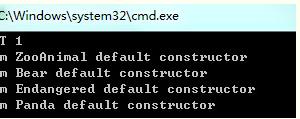
这个结果是毫无疑问的,先调用基类构造函数,再调用派生类。
接着,我们来看TEST2的结果:
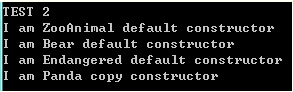
首先调用默认构造函数构造一个zing_zing对象,然后调用拷贝构造函数,将ying_ying拷贝至zing_zing。注意:这里用的是拷贝构造函数,而不是赋值操作符,那什么时候用赋值操作符呢?我们接着看TEST3的结果:
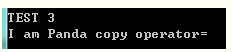
这种情况才调用赋值操作符:是两个对象都已经分配内存后,再进行赋值。这里有个疑问,基类也定义了operator=了,为什么不调用基类的operator=呢?我们将Panda类的operator=注释掉,重新来做TEST3,好玩的结果出现了:
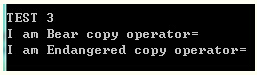
Panda的合成赋值操作符调用了两个基类的operator=。
我们得出以下结论:如果派生类定义了自己的复制构造函数或赋值操作符,则负责复制(赋值)所有的基类子部分,而不再调用基类相应函数。只有派生类使用合成版本的复制构造函数或赋值操作符,才自动调用基类部分相应的函数。
后我们来看一下析构函数的表现:
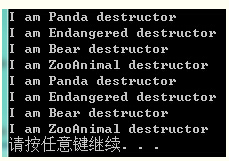
析构函数的行为是符合我们预期的,这里有一点我没有体现出来是zing_zing是ying_ying之后定义的对象,所以zing_zing的构造函数先执行(前4行),后4行代表ying_ying构造函数的执行。如果具有多个基类的类定义了自己的析构函数,则该析构函数只负责清除派生类。
四、多重继承下的类作用域
在多重继承下,多个基类作用域可以包围派生类作用域。查找时,同时检查所有基类继承子树,例如:并行查找Endangered和Bear/ ZooAnimal子树。如果在多个子树上找到该名字,那个名字必须显式指定使用哪个基类。否则,该名字的使用是二义性的。
例如:Endangered类和Bear类都有print函数,则ying_ying.print()将导致编译时错误。
注意:
(1)Panda类的派生导致有两个名为print的成员是合法的。派生只是导致潜在的二义性,如果没有Panda对象调用print,可避免这个二义性。你可以Bear::print或Endangered::print来调用。
(2)当然,如果只在一个基类子树上找到声明是不会出错的。
下面仍然有个小实验要做:
class ZooAnimal
{
public:
//void print(int x){}
};
class Bear : public ZooAnimal
{
public:
void print(int x){}
};
class Endangered
{
public:
void print(){}
};
class Panda : public Bear, public Endangered
{
public:
};
TEST1:将两个基类Bear和Endangered两个print的形参表设为不同。
TEST2:将Bear中的print去掉,在ZooAnimal中增加print。
TEST3:将Endangered中print设置为private访问。
以上三种情况下,当我这样调用ying_ying.print()或ying_ying.print(1)时,都显示编译时错误(二义性)。
我们的得出这样的结论:名字查找的过程是这样的,首先编译器找到一个匹配的声明(找到两个匹配的声明,这导致二义性),然后编译器才确定所找到的声明是否合法。
所以说,当我们调用这样的函数时,应该这样ying_ying.Bear::print()。











 sales@spasvo.com