

Linux驱动开发之主设备号找驱动,次设备号找设备
作者:网络转载 发布时间:[ 2013/5/7 9:57:29 ] 推荐标签:
该函数用到的图1中的devlist数组定义如下:
static const struct memdev {
const char *name;
mode_t mode;
const struct file_operations *fops;
struct backing_dev_info *dev_info;
} devlist[] = {
[1] = { "mem", 0, &mem_fops, &directly_mappable_cdev_bdi },
#ifdef CONFIG_DEVKMEM
[2] = { "kmem", 0, &kmem_fops, &directly_mappable_cdev_bdi },
#endif
[3] = { "null", 0666, &null_fops, NULL },
#ifdef CONFIG_DEVPORT
[4] = { "port", 0, &port_fops, NULL },
#endif
[5] = { "zero", 0666, &zero_fops, &zero_bdi },
[7] = { "full", 0666, &full_fops, NULL },
[8] = { "random", 0666, &random_fops, NULL },
[9] = { "urandom", 0666, &urandom_fops, NULL },
[11] = { "kmsg", 0, &kmsg_fops, NULL },
#ifdef CONFIG_CRASH_DUMP
[12] = { "oldmem", 0, &oldmem_fops, NULL },
#endif
};
通过上面代码及图1可看出,memory_open实际上实现了一个分配器(根据次设备号区分各个设备,并且选择适当的file_operations),图2说明了打开内存设备时,文件操作是如何改变的。所涉及的函数逐渐反映了设备的具体特性。初只知道用于打开设备的一般函数,然后由打开与内存相关设备文件的具体函数所替代。接下来根据选择的次设备号,进一步细化函数指针 ,为不同的次设备号终选定函数指针。
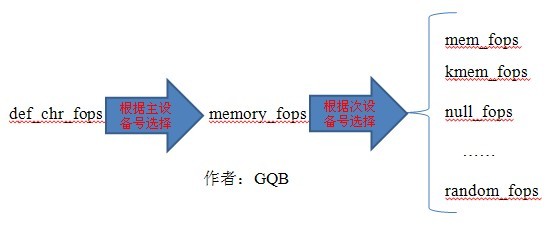
图2:设备驱动程序函数指针的选择过程
本文转载自:http://blog.csdn.net/gqb666/article/details/8805179












 sales@spasvo.com